Doors & trim · 5 min read
Interior doors that stick or won't latch: common causes and fixes
Shorewise Home Services · September 30, 2026

Most interior doors that stick or won’t latch have one of four causes: loose hinge screws letting the door sag, wood swelling in humid air, paint built up on the edges, or a strike plate that no longer lines up with the latch. Start with the hinges. They are the most common cause, and the easiest fix.
A sticking door is a small thing, but it’s one you notice every day, and it’s one of the first things a buyer notices at a showing. Here’s how to work out what’s wrong and what to do about it.
Step one: find where it rubs
Close the door slowly and watch the gap around it. On a well-hung door, the gap is roughly even along the top and both sides.
- Rubbing at the top corner on the latch side usually means the door is sagging on its hinges.
- Rubbing along a whole edge often means the wood has swollen or paint has built up.
- The door closes without rubbing but won’t latch points to the latch and strike plate.
- A gap that’s wide at the top and tight at the bottom, or the other way around, also points to the hinges.
Look for shiny, worn or scuffed paint on the door edge and the frame. That shows you exactly where it’s touching.
Cause one: loose or worn hinge screws
Every time a door opens, its weight pulls on the top hinge. Over the years, those screws loosen, and the door drops at the latch side.
The fix:
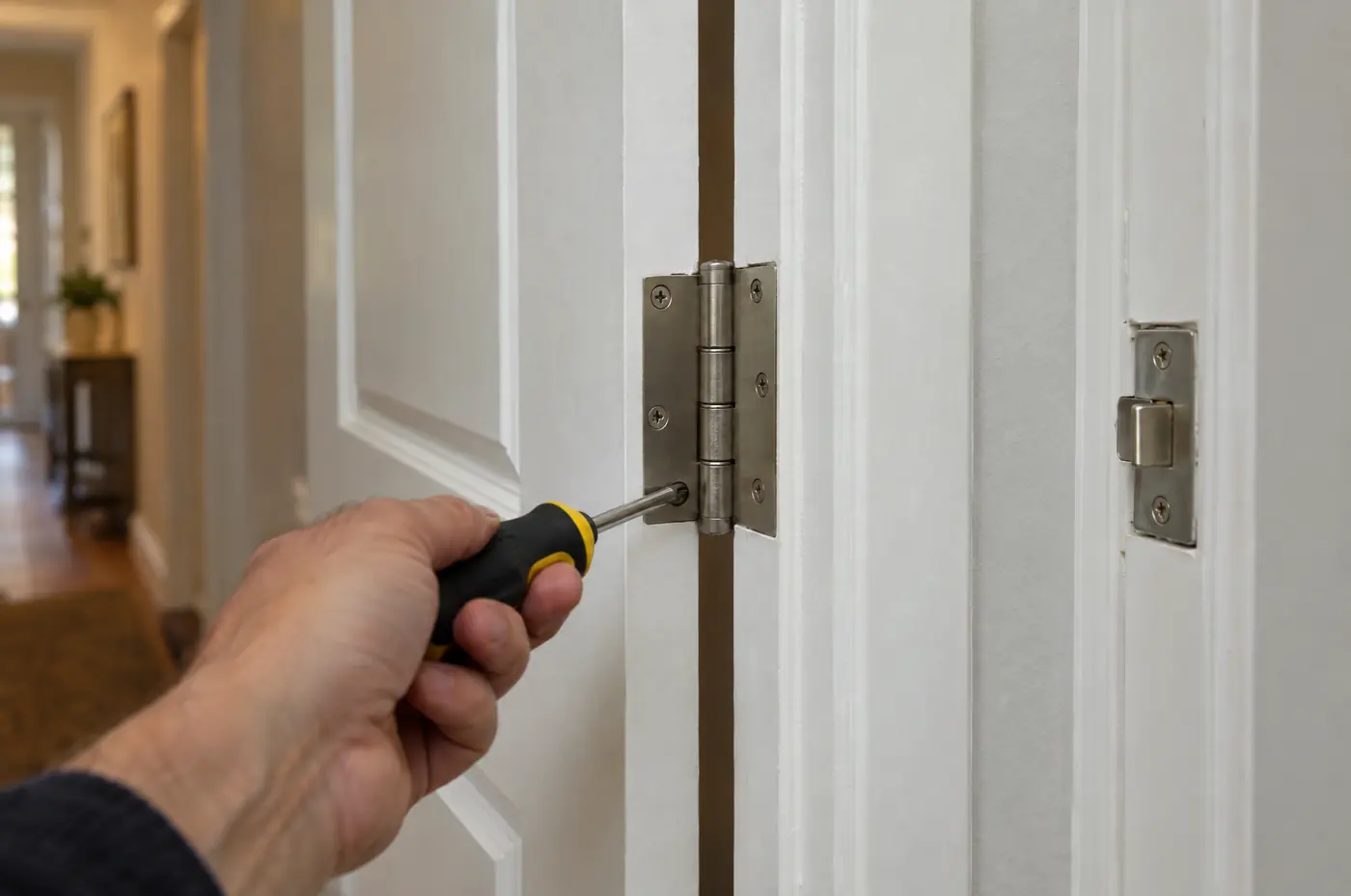
- Tighten every hinge screw, on both the door and the frame.
- If a screw spins without tightening, the hole is stripped. Fill it with wood glue and a few wooden toothpicks or a small dowel, let it dry, trim it flush and drive the screw back in.
- For a door that still sags, replace one screw in the top hinge on the frame side with a longer screw, often 2½ to 3 inches, that reaches the solid framing behind the door frame. Snugging that screw pulls the whole door back up and toward the hinge side.
This one change fixes a surprising number of sticking doors.
Cause two: humidity and swelling
Wood takes on moisture and swells in humid air, then shrinks when the air is drier. In Southwest Florida, that can mean a door that closes easily in February and rubs in August, especially in a house that sat closed up over the summer.
The fix:
- If it only rubs lightly for part of the year, you may be able to live with it, or ease it with a light sanding where it touches.
- If you sand or plane any edge, seal and paint it afterward, including the top and bottom edges of the door, which are often left bare. A raw edge soaks up moisture and swells more.
- Take off as little as you need. Remove too much and you’ll have a gap you can see through once the drier months come.
Cause three: paint build-up
After a few repaints, the edges of a door and its frame can carry several layers of paint. Where the gap was tight to begin with, that’s enough to make it rub.
The fix: sand the paint back on the edge that’s rubbing, then repaint with a thin coat. Let it dry fully before closing the door, or the fresh paint on the door and frame can stick together.
Cause four: the latch misses the strike plate
The strike plate is the metal plate on the frame with a hole the latch clicks into. If the door has shifted even slightly, the latch can land just above or below that hole.
The fix:
- Rub a little lipstick or chalk on the end of the latch, close the door, and see where it marks the strike plate. That shows you which way it’s off.
- If it’s off by a small amount, a metal file can widen the opening in the strike plate.
- If it’s off by more, the strike plate can be moved up or down. That means extending the recess in the frame and filling and touching up the old screw holes.
- Fixing the hinges first often solves the latch problem too.
What about the door hitting the floor?
If the bottom of the door drags on the floor, check the hinges first. If it still drags, new flooring may have raised the floor height. The door can be taken off and trimmed at the bottom, then sealed on the cut edge.
When is it more than a door problem?
If several doors in the house start sticking at once, a gap keeps getting wider over months, or you see new diagonal cracks in the walls above doorways, have the house looked at by the right specialist rather than just adjusting the doors.
If you’d rather have it done, Jimmy will give you a written price before any work starts. Most jobs start around $200. Get in touch.





Quick answers
In short.
Why do my doors stick in summer but not in winter?
Wood takes on moisture and swells in humid air, then shrinks again when the air is drier. In Southwest Florida, doors that close easily in winter may rub in summer. Sealing every edge of the door, including the top and bottom, reduces that movement.
Should I just plane the door down?
Only after checking the hinges. Many sticking doors are simply sagging on loose screws. Planing a sagging door leaves an uneven gap once the hinges are tightened. If you do plane or sand an edge, seal it afterward.
My door closes but won't stay shut. What's wrong?
Usually the latch isn't lining up with the hole in the strike plate on the door frame. Adjusting or moving the strike plate, or slightly enlarging its opening, often solves it.