
Seasonal homes · 5 min read
Coming back for the season: a snowbird's walkthrough checklist for inside your home
Shorewise Home Services · September 30, 2026
When you get back to your Lee County home for the season, walk through every room before you unpack. Use your nose first, then look up at ceilings and upper walls, open every door and cabinet, check caulk lines in the kitchen and bathrooms, and look along the baseboards. Write down what you find and sort it into “now,” “soon” and “watch.”
A Southwest Florida summer is long and humid. A house that sat closed up for months can come back to you with small changes that are easy to miss once the suitcases are open and the grandkids are visiting. This checklist covers the inside of the home only: walls, doors, cabinets, trim and finishes.
Before you unpack: the first ten minutes
Stand just inside the front door for a moment and notice:
- The smell. A clean house smells like nothing. A musty or earthy smell means moisture has been sitting somewhere. Keep it in mind as you walk through and try to find where it is strongest.
- The air. Heavy, damp-feeling air in one room more than others is worth noting.
- The floor inside the door. Look for sand, leaves or anything that suggests something found its way in while you were gone.
Then walk the house in order, one room at a time, with a notepad or your phone camera.
Ceilings and walls
Look up in every room. It is the step most people skip.
- Stains on ceilings or high on walls, especially brown rings or yellow patches.
- New cracks, particularly at the corners of doors and closets, or along ceiling seams.
- Nail pops, which show up as small round bumps or circles in the paint.
- Bubbling or peeling paint, which often means moisture got behind it.
- Small dark spots, especially in bathrooms, closets and corners with little air movement. That can be mildew.
Hairline cracks at the corners of doors are common and usually cosmetic. A stain is different. If you find one, take a clear photo, note the date, and have the source checked by the right specialist before anyone patches or paints over it.
Doors, drawers and closets
- Open and close every interior door. Humidity makes wood swell, so doors that closed easily in April may rub or refuse to latch in October. Read why interior doors stick and how to fix them.
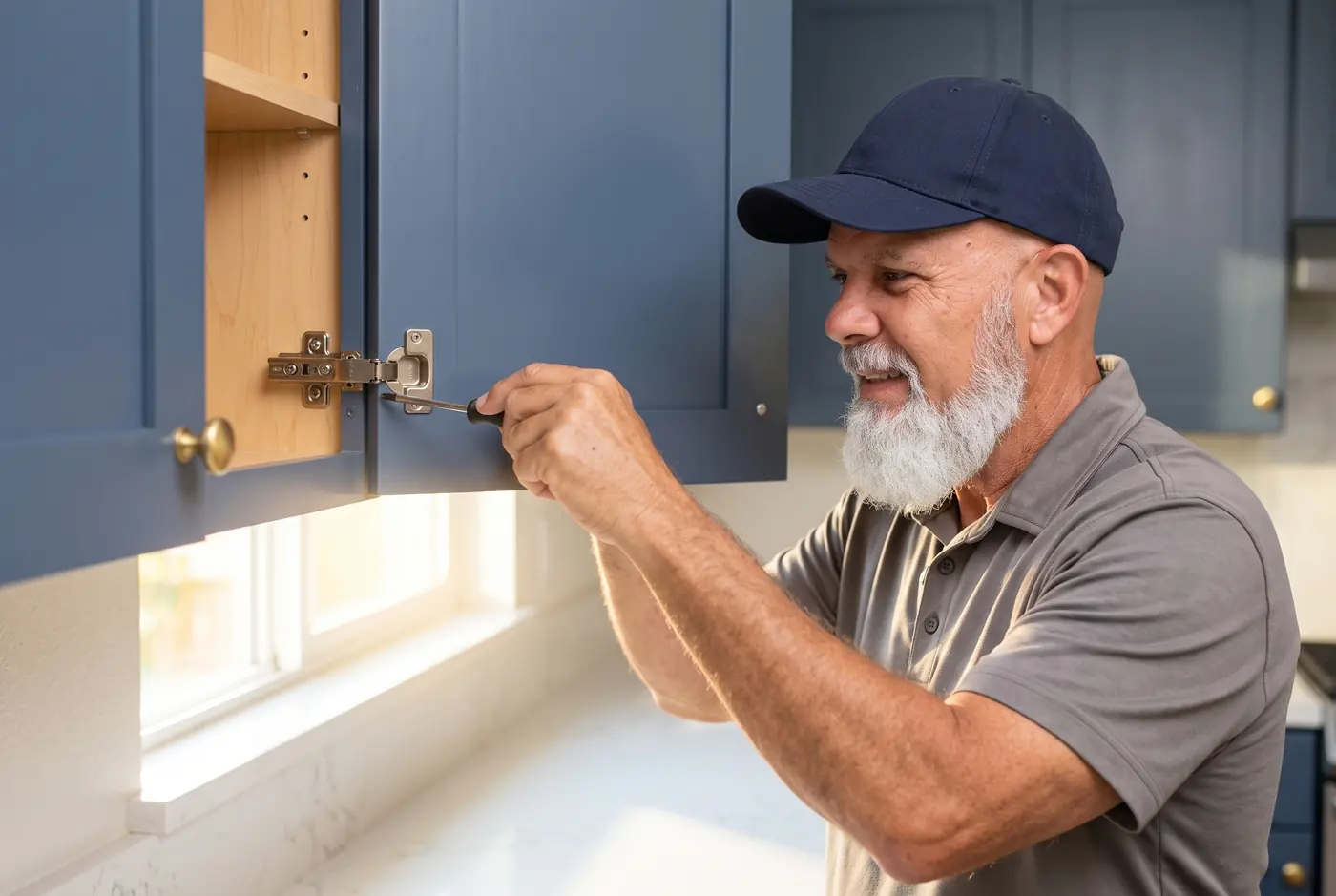
- Try every drawer and cabinet door. Look for drawers that drag and doors that have dropped out of line.
- Look inside closets. Check shoes, leather belts, bags and anything stored in boxes for a white or greenish film. Closets get little air and are often the first place mildew shows up.
- Check sliding and bifold closet doors to make sure they still run on their tracks.
Kitchen and bathrooms
- Caulk lines. Look around tubs, showers, sinks and along the backsplash. Caulk that is cracked, pulling away, or dark underneath is worth replacing, because water can get behind it.
- Grout. Look for cracks or loose pieces, especially on shower floors.
- Cabinets under the sinks. Open them, look at the cabinet floor, and check for swelling, soft spots or stains.
- Tile. Tap gently with a knuckle. A hollow sound under a tile can mean it has come loose from the floor or wall.
Baseboards, trim and floors
- Baseboards that look swollen, split or soft at the bottom edge can point to moisture at floor level.
- Door casing and other trim with paint cracking at the joints.
- Grout lines on tile floors, especially in doorways where people walk most.
Signs of visitors
A closed house is quiet, and pests like quiet. Look under sinks, in the pantry and along the back of closets for droppings, ant trails or chewed packaging. If you find more than a stray bug or two, call a pest control company before you stock the kitchen.
How to sort what you find
Once you have your list, put each item into one of three groups:
- Now. Anything that is spreading or getting worse: mildew, a stain that looks damp, a soft spot in a cabinet floor.
- Soon. Things that bother you but aren’t changing: a sticking door, cracked caulk, nail pops, scuffed walls.
- Watch. Hairline cracks and small marks you want to see again in a month before deciding anything.
The “soon” items are usually best done together on one visit. One trip and one written price for the whole list is simpler for you and quicker than calling someone for each item.
Before you leave again in the spring
Take photos of each room on the day you close up the house. When you come back next season, you’ll have something to compare against, and you’ll know straight away what has changed.
If you’d like help with the list, Jimmy works across Lee County and will give you a written price before any work starts. Get in touch.
Quick answers
In short.
What should I check first when I get back to my Florida home?
Your nose and your ceilings. A musty smell points to moisture somewhere, and stains or new cracks on ceilings and upper walls are easy to miss once you've unpacked. Walk through slowly before you put anything away.
Why do my doors stick when I come back in the fall?
Wood swells when it takes on moisture, and a closed-up house in a Southwest Florida summer can hold a lot of it. Some doors settle back on their own. Others need a small adjustment.
Should I fix things right away or wait?
Deal with anything that is getting worse, like mildew or a spreading stain, straight away. Cosmetic items such as scuffs and sticking drawers can go on a list and be done together, which is usually quicker and cheaper.